Social Studies Resources
Engaging historical and cultural studies for grades 3-4, exploring communities past and present, and early societies. Develop critical thinking and historical inquiry skills through authentic learning experiences.
Social Studies Overview
Program Focus
Historical Thinking: Students develop skills in historical inquiry, evidence analysis, and critical thinking about past and present.
Cultural Understanding: Explore diverse perspectives and experiences, including Indigenous histories and contributions.
Citizenship Education: Build understanding of rights, responsibilities, and active participation in democratic society.
Curriculum Coverage
- Grade 3: Heritage and Identity - Communities in Canada 1780-1850
- Grade 4: Heritage and Identity - Early Societies to 1500 CE
- People and Environments: Geographic thinking and spatial skills
- Indigenous perspectives integrated throughout all units
- Primary source analysis and historical investigation skills
Scope & Sequence Overview
Grade 3: Communities in Canada 1780-1850
Heritage and Identity Focus: Exploring how communities in Canada between 1780 and 1850 met the needs of their residents
Key Themes:
- Early settler communities and their characteristics
- Indigenous communities and their ways of life
- How communities met basic needs (food, shelter, clothing)
- Transportation and communication in early communities
- Roles and responsibilities of community members
Grade 4: Early Societies to 1500 CE
Heritage and Identity Focus: Examining how early societies around the world met their needs and wants
Key Themes:
- Ancient civilizations and their achievements
- Social organization and governance systems
- Technological innovations and their impact
- Trade and cultural exchange
- Beliefs, traditions, and cultural practices
Grade 3: Communities in Canada 1780-1850
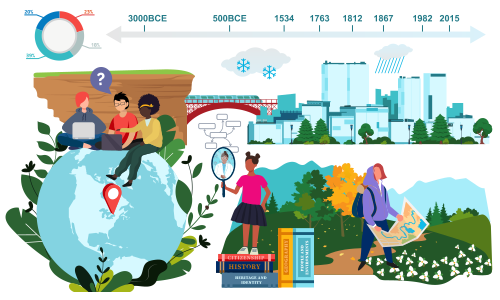
Unit 1: Early Settler Communities
▼Community Characteristics
- Location factors: water sources, fertile land, transportation routes
- Types of settlements: farming communities, trading posts, mill towns
- Physical features and their influence on community development
- Population composition and cultural diversity
- Challenges faced by early settlers
Historical Investigations
- Analyzing maps of early Canadian settlements
- Examining artifacts from settler communities
- Comparing different types of early communities
- Creating timelines of community development
- Role-playing daily life in early settlements
Primary Sources
- Diary entries and letters from early settlers
- Historical photographs and illustrations
- Government documents and land grants
- Newspaper articles from the period
- Archaeological evidence and artifacts
Unit 2: Indigenous Communities
▼Ways of Life
- Traditional territories and seasonal movements
- Sustainable resource management practices
- Social organization and governance systems
- Cultural traditions and spiritual beliefs
- Relationships with the natural environment
Interactions with Settlers
- Trade relationships and economic partnerships
- Cultural exchange and mutual learning
- Treaties and agreements
- Conflicts and their resolutions
- Impact of European settlement on Indigenous communities
Unit 3: Meeting Community Needs
▼Basic Needs
- Food production: farming, hunting, fishing, gathering
- Shelter construction: log cabins, longhouses, tipis
- Clothing creation: materials, tools, and techniques
- Water sources and management
- Fuel and energy sources
Transportation and Communication
- Water transportation: canoes, boats, ships
- Land transportation: walking, horses, ox carts
- Road and trail development
- Communication methods: letters, newspapers, word of mouth
- Impact of transportation on community growth
Unit 4: Community Roles and Responsibilities
▼Community Members
- Farmers and their contributions to the community
- Craftspeople and their specialized skills
- Merchants and traders
- Religious and community leaders
- Women's roles and contributions
- Children's responsibilities and education
Governance and Laws
- Local government structures
- Rules and laws in early communities
- Conflict resolution methods
- Community decision-making processes
- Rights and responsibilities of community members
Grade 4: Early Societies to 1500 CE
Unit 1: Ancient Civilizations
▼Mesopotamia
- Geographic location and environmental factors
- Development of agriculture and irrigation
- Invention of writing (cuneiform)
- Social structure and government
- Contributions to human civilization
Ancient Egypt
- The Nile River and its importance
- Pharaohs and the concept of divine kingship
- Pyramids and monumental architecture
- Hieroglyphic writing system
- Religious beliefs and afterlife concepts
Ancient Greece
- City-states and democratic government
- Philosophy, science, and mathematics
- Art, architecture, and literature
- Olympic Games and athletic competitions
- Influence on modern society
Unit 2: Medieval Societies
▼Feudal Europe
- Feudal system and social hierarchy
- Knights, castles, and chivalry
- Manor system and agricultural life
- Role of the Catholic Church
- Medieval towns and trade
Islamic Golden Age
- Expansion of Islamic civilization
- Advances in science, medicine, and mathematics
- Trade networks and cultural exchange
- Architecture and artistic achievements
- Preservation of classical knowledge
Unit 3: Indigenous Societies of the Americas
▼Maya Civilization
- Advanced calendar and astronomical knowledge
- Hieroglyphic writing system
- Pyramid temples and urban centers
- Agricultural innovations and trade
- Mathematical and scientific achievements
Aztec Empire
- Tenochtitlan and urban planning
- Military organization and expansion
- Agricultural techniques (chinampas)
- Religious practices and ceremonies
- Art, crafts, and cultural achievements
Inca Empire
- Road system and communication networks
- Terraced agriculture in mountain regions
- Quipu record-keeping system
- Architectural achievements (Machu Picchu)
- Social organization and government
Historical Investigation Skills
Formulating Questions
Teaching students to ask meaningful historical questions:
- Who, what, when, where, why, and how questions
- Distinguishing between factual and interpretive questions
- Developing research questions for investigations
- Understanding cause and effect relationships
- Comparing and contrasting different perspectives
Analyzing Evidence
Skills for examining historical sources and evidence:
- Identifying primary and secondary sources
- Evaluating source reliability and bias
- Extracting information from various source types
- Recognizing different perspectives and viewpoints
- Drawing conclusions based on evidence
Communicating Findings
Methods for sharing historical research and understanding:
- Creating timelines and chronological organizers
- Writing historical narratives and reports
- Designing museum exhibits and displays
- Presenting oral reports and discussions
- Using technology for digital storytelling
Assessment Strategies
Performance Tasks
Authentic assessment opportunities for social studies learning:
- Historical investigation projects
- Museum exhibit creation
- Role-playing and simulations
- Timeline and map construction
- Comparative analysis essays
Rubrics and Criteria
Assessment tools aligned with curriculum expectations:
- Historical thinking skills rubrics
- Research and inquiry assessment criteria
- Communication and presentation rubrics
- Critical thinking evaluation tools
- Self and peer assessment checklists
Portfolio Assessment
Comprehensive evaluation through student portfolios:
- Collection of student work over time
- Reflection on learning and growth
- Evidence of historical thinking development
- Self-assessment and goal setting
- Parent and student conferences